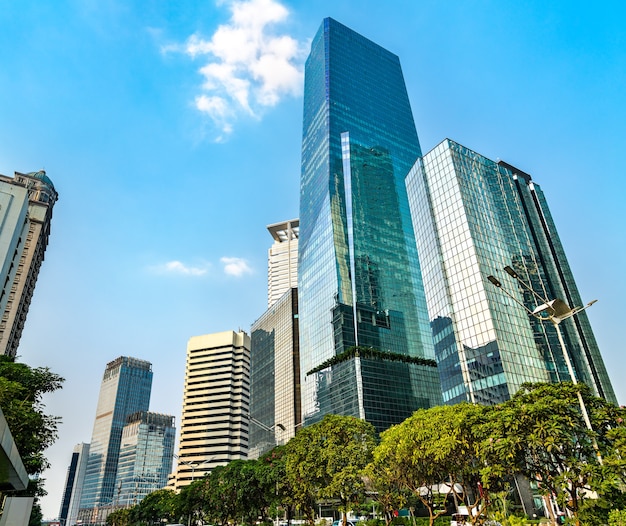
Bali, often perceived solely as a tourist haven, has rapidly evolved into a compelling destination for strategic Foreign Direct Investment (FDI), particularly in the commercial real estate sector. The shift from transient tourism to long-stay digital nomads, international business events, and luxury lifestyle brands has fueled unprecedented demand for high-quality commercial spaces, including co-working hubs, premium retail outlets, high-end F&B venues, and boutique hospitality concepts. This burgeoning demand presents significant high-yield opportunities for foreign investors looking beyond residential villas.
The total FDI realization in Indonesia remains robust, with the tourism and supporting real estate sectors showing resilience and growth, particularly in post-pandemic recovery. However, investing in Bali commercial space investment requires meticulous understanding of Indonesia's complex legal framework concerning property ownership and foreign-owned companies (PMA). Direct land ownership for foreigners remains restricted, necessitating strategic structuring of investments through a PMA company, navigating the Risk-Based Business Licensing (OSS RBA) system, and ensuring full compliance with the Negative Investment List (DNI), now superseded by Presidential Regulation No. 10/2021 (the 'Positive List').
This article serves as a comprehensive guide for foreign investors and PMA entities. We will dissect the current regulatory environment, analyze the most promising sub-sectors in Bali commercial space investment, and provide practical strategies for legal compliance and maximizing investment returns. Understanding the nuances of property rights—such as Hak Guna Bangunan (HGB) and Hak Pakai—is critical to securing your investment in this dynamic market. At Gaivo.co.id, Indonesia's leading foreign investment advisory firm, we provide the expertise to successfully structure and execute your investment in this competitive landscape.
Related Article:
Understanding the Legal Structure for Foreign Investment in Bali Commercial Space
Foreign entities cannot own land directly in Indonesia. Successful Bali commercial space investment hinges on establishing the correct legal vehicle, typically a PMA company, and securing the appropriate land rights.
The Mandatory PMA Establishment
Foreign investors must establish a Limited Liability Company (PT PMA) in Indonesia to legally own the commercial business and acquire the necessary land usage rights. The establishment process, governed by Law No. 25/2007 on Investment and the OSS RBA system, defines the scope of commercial activity and the minimum capital requirements. The chosen business classification, or KBLI code (e.g., Real Estate with Owned or Leased Property - KBLI 68110 or 68120), must align with the intended commercial real estate Bali purpose.
Navigating Land Rights: HGB and Hak Pakai
Foreign investors, through their PMA, can obtain specific usage rights over land:
- Hak Guna Bangunan (HGB): The right to erect and own buildings on land for a fixed period (up to 30 years, extendable). This is the standard mechanism for owning the physical commercial building.
- Hak Pakai: The right to use and/or collect produce from land owned by the State or another party, also for a fixed period. This is often used for residential or specific commercial purposes.
The highest right, Hak Milik (Freehold), remains strictly reserved for Indonesian citizens, as stipulated by Law No. 5/1960 on Basic Agrarian Regulations.
Related Article: Korea Investment Indonesia: Opportunities and FDI Guide
Current Regulatory Framework and Investment Policy 2025
Indonesia's investment climate is shaped by continuously evolving regulations designed to streamline procedures and attract quality FDI.
Risk-Based Business Licensing (OSS RBA) System
The OSS RBA system, mandated by the Job Creation Law (Law No. 11/2020) and further detailed in Government Regulation (PP) No. 5/2021, governs all business licensing, including for property development and commercial operation. The process is now risk-based, meaning high-risk projects require more stringent verification (certificates and permits) compared to low-risk activities. A clear understanding of the KBLI for your bali commercial space investment determines the level of compliance needed.
The Positive Investment List (Perpres 10/2021)
Presidential Regulation (Perpres) No. 10/2021, replacing the former Negative Investment List (DNI), provides clarity on sectors open to foreign investment. While general real estate is largely open, certain restrictions or special conditions may apply to specific types of commercial operations, particularly small and medium enterprises (SMEs). For large-scale foreign investment Bali projects, the maximum foreign ownership may be 100%, subject to specific KBLI codes and minimum capital requirements as enforced by the Investment Coordinating Board (BKPM).
Related Article: Foreign Direct Investment Indonesia 2020 Explained
Strategic Locations for High-Yield Bali Commercial Space Investment
Location is paramount in commercial real estate. Bali's market exhibits distinct zones with varying demand and rental yield potentials.
The 'Golden Triangle': Seminyak, Canggu, and Uluwatu
Canggu has cemented its position as the premier lifestyle and digital nomad hub, driving massive demand for co-working spaces, boutique gyms, and high-foot-traffic retail. Seminyak maintains its status for premium, established retail and luxury F&B. Uluwatu, targeting the luxury tourist and surf markets, commands high rates for high-end resort and commercial leisure spaces. Investments here are characterized by high entry costs but potentially substantial rental yield.
Emerging Opportunities: Pererenan, Cemagi, and Sanur
Areas like Pererenan and Cemagi offer relief from Canggu’s density, attracting developers seeking slightly lower land prices and offering mid-to-high-end commercial concepts. Sanur, driven by the government's focus on medical tourism and the new Bali International Hospital, presents unique opportunities for commercial facilities catering to the healthcare and wellness sectors, making it a compelling spot for targeted bali fdi.
Related Article: Top Stock Indonesia: Guide for Investors in 2026
Financial Benchmarks and FDI Climate Data
Analyzing key data and benchmarks helps frame the profitability and stability of bali commercial space investment.
FDI Realization and Growth Metrics
According to recent BKPM data, Indonesia continues to attract significant FDI, consistently exceeding realization targets. While manufacturing dominates, the services sector, which includes real estate and tourism, remains a top contributor, particularly in Bali and surrounding islands. The stability of the Rupiah and steady economic growth (forecasted at around 5% by the World Bank) provide a strong macro foundation for real estate investments.
Rental Yield and Occupancy Rates
While residential yields are typically 6-8%, premium commercial real estate Bali (such as prime F&B outlets or well-managed co-working spaces in Canggu/Seminyak) can command gross rental yields of 9-12% or higher, particularly when managed effectively through revenue-sharing models. Occupancy rates for high-quality commercial properties in strategic locations have largely recovered post-pandemic, reflecting the influx of long-term residents and businesses.
Related Article: Top Venture Capital Indonesia for Startups and Investors
Practical Guidance: Structuring the Investment
Proper structuring is essential for securing the investment and ensuring a clear exit strategy.
Due Diligence on Land Status and Zoning
Before acquiring Hak Guna Bangunan (HGB) rights, exhaustive due diligence must be performed to verify the land title's authenticity, clear boundaries, and, most importantly, the zoning designation (RTRW - Spatial Planning) set by the local government (Badung or Denpasar). Commercial developments require specific zoning (Kawasan Perdagangan dan Jasa) and the appropriate building permit (Persetujuan Bangunan Gedung - PBG), replacing the former IMB.
Tax Implications for Commercial Property
Foreign investors must understand the tax landscape, including:
- Land and Building Tax (PBB).
- Acquisition Tax on Land and Building Rights (BPHTB).
- Rental Income Tax (PPh Pasal 4(2)), which is final and typically 10% for property rentals.
Proper accounting and tax structuring through the PMA are non-negotiable compliance requirements, mandated by Law No. 7/2021 on Harmonization of Tax Regulations.
Related Article: Blue Chip Stock Indonesia: Guide for Investors
Common Pitfalls and Mitigation Strategies
The Bali market, while lucrative, carries specific risks for the unwary foreign investor.
The Risk of Unlicensed 'Nominee' Structures
A frequent and illegal mistake is utilizing a 'Nominee' structure—where an Indonesian citizen holds the property in their name for the benefit of a foreigner. This practice is explicitly illegal under Law No. 25/2007 on Investment and can lead to the confiscation of assets without compensation. Mitigation involves strictly adhering to the PMA structure for HGB acquisition.
Permitting Delays and Compliance Issues
Navigating local permits (e.g., PBG/IMB) and licensing can be time-consuming and challenging due to local complexities. Delays often stem from non-compliance with technical requirements or local spatial planning. Working with experienced local consultants, like Gaivo.co.id, ensures the legal structure and permits are secured concurrently and accurately, minimizing project delays and non-compliance fines.
Related Article: Market Stock Indonesia: Guide for Foreign Investors
Case Studies: Successful Foreign Commercial Ventures
Successful PMA investments demonstrate the potential of targeted bali commercial space investment.
The Premium Co-Working Hub Model
A Singaporean PMA entity established a high-end co-working and business center in Canggu. By securing a 30-year HGB and focusing on amenities (high-speed internet, private offices, F&B services), they achieved 95% occupancy within the first year, generating annual gross yields exceeding 10%. Their success was attributed to a clearly defined KBLI code and immediate compliance with local regulations, bypassing typical licensing bottlenecks.
Boutique Retail and Hospitality Development
A European investor used their PMA to develop a commercial complex in Uluwatu, featuring a boutique hotel and luxury retail spaces. The strategic decision to secure the necessary tourism licenses and high-grade construction permits upfront allowed them to attract top international tenants willing to pay premium lease rates, validating the feasibility of high-capital, high-return property investment Indonesia models in Bali.
Related Article: Sovereign Fund Indonesia: Role, Structure, and Investment Impact
Best Practices for Long-Term Investment Security
Securing a Bali commercial space investment requires long-term strategic management and legal vigilance.
Professional Asset Management and Maintenance
Commercial assets demand rigorous professional management, focusing not just on tenant acquisition but also on proactive maintenance to preserve the asset's value and lease appeal. Utilizing a local, licensed management company is crucial for seamless operation and handling local compliance issues.
Proactive HGB and Permit Renewal
Investors must establish a proactive system for monitoring and renewing the HGB and commercial licenses, well in advance of their expiry dates. The renewal of HGB is not automatic; it requires compliance checks and proof of utilization, emphasizing the need for ongoing legal oversight.
Related Article: Money Market Fund Indonesia: Guide for Foreign Investors
Frequently Asked Questions (FAQ) for Foreign Investors
What is the minimum investment capital required for a PMA in Bali?
The standard minimum committed investment capital for a PMA company, applicable to most real estate sectors, is IDR 10 billion (approx. $650,000). This figure, mandated by BKPM, can be structured as paid-up capital and loan, but the full amount must be committed in the PMA documentation. Exceptions exist for specific low-risk sectors or those structured under certain bilateral treaties.
Can a foreigner lease a commercial property in Bali directly?
Yes, a foreigner can legally enter into a lease agreement (Sewa Menyewa) for a commercial property in Bali directly, even without establishing a PMA. However, this only grants them the right to occupy or use the space. To legally operate a commercial business generating revenue, the individual or entity must still secure the necessary operating permits, often necessitating the formation of a local legal entity (such as a PT PMA) depending on the scale and risk of the business activity.
What is the difference between HGB and Hak Sewa?
HGB (Hak Guna Bangunan) grants the PMA the right to build and own the physical building on the land for a long fixed period, providing a strong security of tenure. Hak Sewa (Leasehold), is merely the temporary right to use a property for a defined rent and period. HGB is a superior right for developers and long-term asset holders engaging in investment in Bali.
Is it safer to invest in commercial space through a local Indonesian partner?
While local partnership (Joint Venture PMA) is a viable structure, the majority of investors prefer 100% foreign ownership if permitted by Perpres 10/2021, to maintain full control. Engaging a local partner purely to bypass PMA requirements is the illegal Nominee structure. Safety is achieved through adherence to the 100% PMA framework where possible, or through a fully transparent Joint Venture PMA with clear legal agreements.
How does the new PBG system affect commercial development timelines?
The Persetujuan Bangunan Gedung (PBG) replaces the old IMB and requires compliance verification before construction begins, whereas the IMB was often treated as a formality. While the intention is to streamline the process, inadequate technical documentation and non-compliance with local zoning (RTRW) can lead to significant delays in securing the final PBG, thus impacting the overall timeline for commercial real estate Bali projects.
Related Article: Best Investment in Indonesia: Top Opportunities 2026
Conclusion: Seizing the Bali Commercial Opportunity
The market for Bali commercial space investment is entering a matured phase, marked by high demand for quality and strategic location. The transition from informal arrangements to strict adherence to the PMA structure and the OSS RBA system presents both challenges and unparalleled security for those who comply. Investors who secure the appropriate land rights (HGB) through a robust PMA entity and conduct meticulous due diligence stand to benefit immensely from high rental yields and long-term capital appreciation.
Navigating the intersection of agrarian law, investment policy, and local zoning requires expert guidance. The successful execution of a bali fdi strategy hinges on timely compliance with Perpres 12/2021 and obtaining the correct permits like PBG, ensuring your investment is both profitable and legally sound for decades to come.
Ready to act? Contact Gaivo for a complimentary consultation.
Compliance Note: This information is based on current Indonesian investment regulations, including Law No. 25/2007 on Investment, Law No. 11/2020 on Job Creation, Government Regulation No. 5/2021, and Presidential Regulation No. 10/2021. Regulations are subject to change, and specific legal advice tailored to your project is mandatory before investment execution. Data referenced is sourced from BKPM and World Bank reports as of late 2024. Official BKPM Site | Official OSS RBA Portal