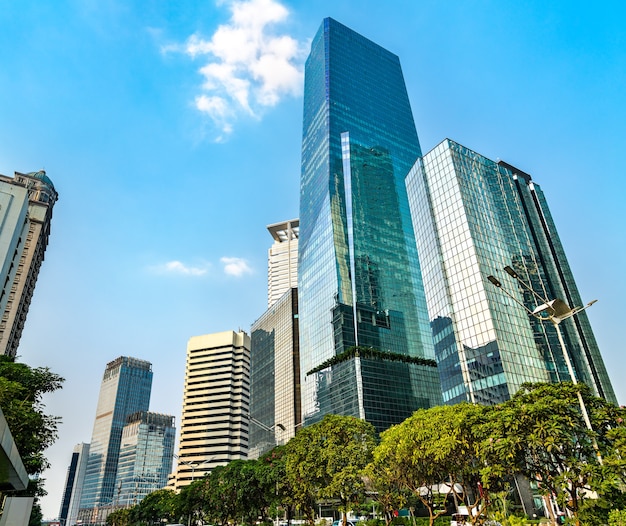
Indonesia stands as the undisputed economic titan of Southeast Asia, with its retail sector serving as the vital engine of national growth. In 2025, the Indonesian retail market reached an estimated valuation of USD 377.2 billion, with projections indicating a surge to USD 560 billion by 2034. For foreign investors, this represents a generational opportunity to tap into a consumer base of over 280 million people, driven by a rapidly expanding middle class that is expected to account for over 55% of households this year. However, navigating the Indonesia retail sector investment landscape requires more than just capital; it demands a sophisticated understanding of a regulatory environment that has undergone radical shifts between 2021 and late 2025.
The introduction of Government Regulation No. 28 of 2025 and BKPM Regulation No. 5 of 2025 has fundamentally redefined the "rules of engagement" for Foreign Direct Investment (FDI) or Penanaman Modal Asing (PMA). While the government has significantly lowered the barrier for paid-up capital to IDR 2.5 billion, the requirement for a total investment value exceeding IDR 10 billion per 5-digit KBLI (business classification) remains a steadfast pillar of the regime. The challenge for modern investors lies in the nuance of "Risk-Based Licensing" and the new "lock-up" periods on capital, which are designed to filter for committed, long-term partners rather than speculative ventures.
At Gaivo.co.id, we recognize that the path to a successful retail launch in Jakarta, Surabaya, or the emerging IKN (New Capital City) is paved with regulatory compliance and localized market insight. This article provides a comprehensive breakdown of the 2025 investment climate, the latest legal frameworks, and the practical strategies necessary to turn Indonesian consumer demand into sustainable corporate profit. Whether you are eyeing the IDR 141 billion offline retail segment or the explosive e-commerce space, our expertise ensures your entry is both seamless and legally fortified.
Related Article: Indonesia Investment Fund: A Guide for Foreign Investors
The Regulatory Framework for FDI in Retail (2024-2025)
Investment in the Indonesian retail sector is primarily governed by the Omnibus Law on Job Creation, which was updated and reaffirmed in 2023, and the subsequent "Positive Investment List." Unlike previous decades where retail was heavily restricted, the current regime considers most retail categories open for 100% foreign ownership, provided the investment meets the PMA (Foreign Investment) thresholds.
Recent Legislative Updates: BKPM Regulation No. 5 of 2025
On October 2, 2025, the Ministry of Investment (BKPM) issued Regulation No. 5 of 2025, which serves as the primary technical guideline for risk-based business licensing. A major breakthrough in this regulation is the reduction of the minimum paid-up capital from IDR 10 billion to IDR 2.5 billion (approx. USD 155,000) per company. This change is intended to improve capital efficiency for startups and medium-sized foreign enterprises entering the market. However, investors must note that the Total Investment Value (including equity and debt, but excluding land and buildings) must still exceed IDR 10 billion per 5-digit KBLI code.
The Capital Lock-Up Requirement
To ensure that the reduced paid-up capital is used for genuine business growth, Article 27 of BKPM Reg 5/2025 introduces a mandatory 12-month lock-up period. The deposited capital cannot be withdrawn or transferred out of the company’s Indonesian bank account for one year from the date of injection. Exceptions are only granted for legitimate operational expenditures, such as purchasing inventory, paying wages, or acquiring fixed assets like store equipment.
Risk-Based Licensing via OSS-RBA
The Online Single Submission Risk-Based Approach (OSS-RBA) remains the central portal for all licensing. Most retail businesses fall under "Medium-Low" or "Medium-High" risk categories. For a desainer website or a digital retailer, the Business Identification Number (NIB) acts as the primary license. However, for physical department stores or supermarkets, additional "Standard Certificates" verified by local governments are required before commercial operations can commence.
Related Article: Indonesia Nickel Mining Company Stock: Investment Guide
Analysis of the Indonesian Investment Climate
Indonesia's economic resilience is a magnet for global capital. In 2024, the country maintained a GDP growth rate of 5.03%, with household consumption remaining the primary driver, contributing over 56% to the total economy. This stability has encouraged a diverse range of FDI sources, with Singapore, China, and the United States leading the inflows.
Demographic Dividend and Urbanization
The retail sector thrives on the "Demographic Dividend." With a young, tech-savvy population and nearly 12 million new urban residents added between 2020 and 2025, demand for organized retail—supermarkets, convenience stores, and specialty boutiques—is at an all-time high. Modern retail formats now account for nearly 58% of total retail sales, as traditional warungs (small stalls) increasingly integrate into digital supply chains.
Digital Integration and Omnichannel Trends
The World Bank’s 2025 Indonesia Economic Prospects report highlights that digital transformation is the key to future productivity. Nearly 38% of Indonesian shoppers now use an omnichannel approach, researching products online before purchasing in-store (or vice-versa). Consequently, retail investment is no longer just about floor space; it is about "Phygital" infrastructure—warehousing, last-mile logistics, and digital payment integration.
Regional Growth Beyond Jakarta
While Jakarta and West Java received the lion's share of investment in 2024 (Realizing IDR 71.1 trillion and IDR 72.5 trillion respectively), there is a significant push toward secondary cities. Regions like South Sulawesi and East Kalimantan (near the new capital) are seeing double-digit growth in retail realization as the government decentralizes economic activity.
Related Article: Shinhan Asset Management Indonesia: A Guide for Foreign Investors
Step-by-Step Guide to Establishing a Retail PMA
Entering the Indonesian retail market as a foreign entity requires a structured legal approach to avoid administrative sanctions or delays.
Step 1: Selecting the Correct KBLI Codes
Under the 2025 regulations, business activities are categorized by KBLI codes. For retail, choosing between KBLI 4711 (Supermarkets) or KBLI 4771 (Clothing Retail) is critical, as some codes may have specific partnership requirements with local Micro, Small, and Medium Enterprises (MSMEs). Gaivo.co.id assists in selecting the optimal codes to maximize 100% foreign ownership eligibility.
Step 2: Company Incorporation and Capital Injection
Once the KBLI is decided, the company must be incorporated as a PT PMA (Perseroan Terbatas Penanaman Modal Asing). Investors must then fulfill the IDR 2.5 billion paid-up capital requirement. Under the new Minister of Law and Human Rights Regulation No. 11 of 2024, this capital injection is a prerequisite for the Investor KITAS (Stay Permit), which now requires a minimum individual share ownership of IDR 10 billion for those wishing to reside in Indonesia.
Step 3: Fulfillment of Technical Commitments
Retailers often require specific environmental permits (SPPL or UKL-UPL) and building approvals (PBG). Under BKPM Reg 5/2025, "Large Enterprises" are given a one-year "Business Preparation Period" to fulfill these requirements. If your project involves infrastructure or building construction, this period can be extended up to three years.
Related Article: KKR Investment Indonesia: A Complete Guide for Foreign Investors
Key Benefits of Investing in the Retail Sector
Why choose Indonesia over other ASEAN neighbors like Vietnam or Thailand? The answer lies in the sheer volume and the regulatory "red carpet" currently being rolled out.
- 100% Foreign Ownership: Most retail sub-sectors, including department stores and specialty outlets, are now open for full foreign control under the 2021-2025 Positive Investment List.
- Lower Entry Costs: The 75% reduction in minimum paid-up capital (from IDR 10bn to IDR 2.5bn) significantly improves the initial IRR for foreign startups.
- Tax Incentives: Retailers who establish operations in Special Economic Zones (SEZs) or invest in "pioneer industries" may qualify for Tax Holidays or Tax Allowances under Government Regulation No. 40 of 2021.
- Market Reach: Access to the largest e-commerce market in ASEAN, projected to reach USD 146 billion by 2025.
Related Article: Setiabudi Investment Management: A Comprehensive Guide for Foreign Investors in Indonesia
Case Study: International Fashion Retailer Entry (2024)
In mid-2024, a European mid-market fashion brand sought to enter the Indonesian market. Their initial plan was to open five flagship stores across Jakarta and Bali. Gaivo's advisory team identified that by using the "Wholesale and Retail" project integration allowed under BKPM Reg 5/2025, the brand could consolidate their multiple outlets into a single investment plan.
The Outcome: By centralizing their investment realization, they met the IDR 10 billion threshold through a combination of leasehold improvements, inventory, and local marketing spend. They successfully utilized the IDR 2.5 billion paid-up capital rule to maintain liquidity for their first 12 months of operations. Today, they operate with 100% foreign ownership and have successfully integrated their offline stores with a local Shopee and Tokopedia presence, achieving a 20% sales uplift through omnichannel strategies.
Related Article: Private Equity Fund Indonesia: Complete Investor Guide
Common Pitfalls and How to Avoid Them
Despite the "Ease of Doing Business" reforms, many investors stumble on technicalities that lead to the revocation of licenses.
Failure to Submit LKPM Reports
Under BKPM Regulation No. 5 of 2025, all PMA companies must submit a Quarterly Investment Activity Report (LKPM). The deadlines have been adjusted to the 15th of April, July, October, and January. Failure to report for two consecutive quarters can lead to the freezing of the NIB. Gaivo.co.id provides managed LKPM services to ensure continuous compliance.
Misunderstanding "Location" for Retail
A frequent error is assuming that the IDR 10 billion investment must be spent per store. Regulation 5/2025 clarifies that for certain sectors like Food & Beverage and specific retail lines, the investment threshold is calculated per city/regency rather than per outlet. This offers massive operational flexibility for chain retailers.
Incomplete Halal Certification
Since October 2024, Indonesia has mandated Halal Certification for all food, beverage, and cosmetic products. Retailers importing these goods must ensure their global suppliers comply with BPJPH standards. Non-compliance can lead to products being pulled from shelves, regardless of the company's PMA status.
Related Article:
Best Practices for Retail Investors in 2025
Success in the Indonesian archipelago requires a "Glocal" (Global + Local) mindset.
- Build Local Partnerships: Even if you own 100% of the company, partnering with local MSMEs for supply chain needs is not only good for ESG (Environmental, Social, and Governance) scores but often facilitates smoother local government relations.
- Prioritize Digital Payments: Cash is no longer king in urban Indonesia. E-wallet adoption surpassed 75% in 2025. Your retail POS must support GoPay, OVO, and the national QRIS standard.
- Monitor Regulatory Shifts: Regulation in Indonesia can change rapidly. Subscribing to advisory updates from firms like Gaivo is essential for staying ahead of new VAT rules or labor law amendments.
Related Article: Korea Investment Indonesia: Opportunities and FDI Guide
Frequently Asked Questions (FAQs)
1. Can a foreigner own 100% of a retail business in Indonesia? Yes. Under the current Positive Investment List, most retail categories (department stores, clothing, electronics, etc.) are open for 100% foreign ownership. However, certain "small-scale" retail remains reserved for local MSMEs. It is vital to verify your specific KBLI code with a consultant before proceeding.
2. What is the difference between Paid-up Capital and Total Investment? Paid-up capital is the cash actually injected into the company's bank account (minimum IDR 2.5 billion). Total Investment is the total value of your project (minimum >IDR 10 billion), which includes equity, loans, equipment, and startup costs, excluding land and buildings.
3. Is an Investor KITAS still IDR 1 billion? No. Under Minister of Law and Human Rights Regulation No. 11 of 2024, the share ownership requirement for an Investor KITAS has been raised to IDR 10 billion. This is a move by the government to ensure that stay permits are granted to "serious" investors contributing significantly to the economy.
4. How long does it take to set up a Retail PMA? With the updated OSS system, obtaining an NIB can take as little as 24-48 hours. However, the full process of incorporation, tax registration, and bank account opening typically takes 4 to 6 weeks. BKPM now enforces a general one-year deadline to commence operations after licensing.
5. Are there restrictions on what I can sell? While the business model is open, the products are regulated. Certain items require BPOM (Food & Drug) registration or SNI (National Standard) certification. Additionally, all food and cosmetics must have a Halal certificate or a non-halal label as of late 2024.
6. Can I open a retail store in a residential area? Generally, no. Business activities must comply with the RDTR (Detailed Spatial Plan) of the local regency. Retail stores must be located in zones designated for "Commercial and Service" use. The OSS system will automatically check for Spatial Utilization Conformity (KKPR).
7. What are the penalties for not meeting the investment threshold? If a company fails to realize the IDR 10 billion investment within the agreed timeframe (usually 1-3 years), the BKPM may issue written warnings, temporarily suspend activities, or even revoke the company's NIB and business licenses.
8. Do I need to hire local employees? Yes. Indonesian labor law (Law No. 13/2003 as amended) encourages the absorption of local labor. For every foreign worker (Expat) employed, there is usually a requirement to hire a certain number of local counterparts (often a 1:10 ratio) and pay a DKP-TKA compensation fund.
Related Article: Foreign Direct Investment Indonesia 2020 Explained
Conclusion: Seizing the Indonesian Retail Momentum
The Indonesia retail sector investment landscape in 2025 is characterized by a unique paradox: it has never been more accessible due to reduced paid-up capital requirements, yet it has never been more scrutinized due to enhanced digital supervision and stricter stay permit rules. The government's message is clear—Indonesia is open for business, but it seeks quality over quantity. By aligning your business model with BKPM Regulation No. 5 of 2025 and the national digital transformation goals, your retail venture can secure a dominant position in the world's fourth most populous nation.
As we look toward 2026, the retail sector is projected to remain a "bright spot" in Asia, shielded by strong domestic demand even amidst global volatility. However, the technicalities of PMA status, LKPM reporting, and Halal compliance mean that an expert partner is not just a luxury—it is a necessity. Gaivo.co.id provides the end-to-end advisory services required to navigate these complexities, from initial market entry strategy to ongoing corporate secretarial support.
Ready to act? Contact Gaivo for a complimentary consultation and take the first step toward conquering the Indonesian retail market today.