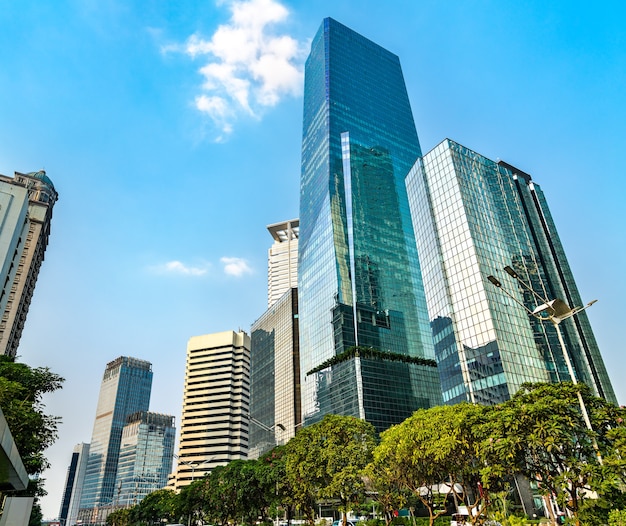
Indonesia's tourism sector is currently experiencing a historic resurgence, transitioning from recovery to sustained expansion, presenting a prime window for Foreign Direct Investment (FDI). With its unrivaled cultural diversity, stunning archipelago, and robust government support, the Indonesian hospitality and tourism landscape offers investment opportunities that extend far beyond the established markets of Bali.
The Ministry of Tourism and Creative Economy (Kemenparekraf) targeted 16 million foreign tourist arrivals for 2025, building on the strong recovery momentum that saw international arrivals reach 13.74 million in 2024 (Source: Central Statistics Agency). This aggressive growth target signals immediate and long-term demand for high-quality accommodation, integrated infrastructure, and innovative tourism services.
However, successful entry into this market requires more than just capital; it demands a deep understanding of Indonesia's evolving regulatory framework, especially concerning the Risk-Based Business Licensing (OSS-RBA) system. Foreign investors often struggle to navigate the sector-specific KBLI codes, mandatory capital requirements, and regional incentives offered through Special Economic Zones (SEZs).
As Indonesia's leading foreign investment advisory firm, Gaivo.co.id is positioned to guide your business through these complexities. We translate regulatory changes into actionable investment strategies, ensuring your capital is deployed efficiently and compliantly within this dynamic market. This comprehensive guide provides the authoritative insights necessary to capitalize on current Indonesia tourism investment openings.
Related Article: Korea Investment Indonesia: Opportunities and FDI Guide
Regulatory Landscape: New Rules for PMA Establishment
The Indonesian government, through the Job Creation Law (Omnibus Law), has fundamentally reshaped the investment climate, prioritizing simplification and clarity. Foreign investors (PMA) must adhere to the latest regulations issued by the Investment Coordinating Board (BKPM).
Clarifying PT PMA Capital Requirements (BKPM Reg. 5/2025)
A significant amendment under BKPM Regulation No. 5 of 2025 clarifies the financial threshold for establishing a Foreign Investment Company (PT PMA). Previously, there was ambiguity regarding minimum capital.
- Total Investment Value: Must be greater than IDR 10 billion (approximately USD 650,000) for each 5-digit KBLI business code, excluding land and buildings. This commitment remains the core measure of the project scale.
- Minimum Paid-up Capital: The required minimum issued and paid-up capital that must be deposited at establishment is now explicitly set at IDR 2.5 billion (approximately USD 162,500) per company.
This separation effectively lowers the immediate cash barrier for market entry while maintaining the commitment to substantial project investment, making Indonesia tourism investment openings more accessible.
The Risk-Based Business Licensing (OSS-RBA) System
All tourism-related business activities, from luxury resorts (KBLI 5511) to travel agencies (KBLI 7911), are governed by the OSS-RBA system. Licensing is now determined by the assessed risk level (Low, Medium-Low, Medium-High, or High).
- For most high-end tourism projects (e.g., development of 5-star hotels or integrated tourism areas), the risk level is typically Medium-High or High.
- This necessitates obtaining a Business Identification Number (NIB) and fulfilling specific commitments (such as obtaining a Building Approval – PBG, and a Certificate of Proper Function – SLF) before commercial operations can commence (Source: BKPM/OSS).
Investment Priority List and Open Sectors
Indonesia's Investment Priority List, derived from Presidential Regulation No. 10 of 2021, defines sectors that are fully open to foreign ownership, including most areas of hospitality, accommodation, and travel services. Crucially, the government offers fiscal incentives, such as tax allowances and tax holidays, for tourism investments made in designated priority areas or those involving high-impact activities like integrated eco-tourism development.
Related Article: Foreign Direct Investment Indonesia 2020 Explained
Strategic Investment Zones: Super Priority Destinations (SPD) and SEZ
To diversify economic growth away from Java, the government has launched strategic initiatives creating focused growth poles, offering concentrated investment opportunities.
The '10 New Balis' and Super Priority Destinations (SPD)
The government has designated five areas as Super Priority Destinations (SPD) under the '10 New Balis' initiative, receiving massive infrastructure injection to accelerate their readiness for international tourism:
- Lake Toba (North Sumatra): Focus on geo-park, wellness, and cultural tourism.
- Mandalika (Lombok, West Nusa Tenggara): Sports tourism (MotoGP circuit), and luxury resort development.
- Labuan Bajo (East Nusa Tenggara): Gateway to Komodo National Park, focusing on marine and eco-tourism.
- Borobudur (Central Java): Heritage and spiritual tourism.
- Likupang (North Sulawesi): Marine and diving tourism.
Fiscal Incentives in Special Economic Zones (SEZ)
Eight Special Economic Zones (SEZ) are specifically designated for tourism, including Mandalika, Likupang, Tanjung Lesung, and Nongsa. Investing within these SEZs unlocks superior fiscal incentives:
- Tax Holidays: Corporate Income Tax (CIT) reductions of up to 100% for 10-20 years, depending on the investment value (Source: Kemenko Perekonomian).
- VAT and Import Duty Exemptions: Exemption from Value Added Tax (VAT), Sales Tax on Luxury Goods (PPnBM), and Import Duties for the importation of certain capital goods and raw materials.
These zones offer a concentrated, simplified regulatory environment, making them highly attractive for large-scale Indonesian hospitality sector projects.
Related Article: Top Stock Indonesia: Guide for Investors in 2026
Indonesia's Buoyant Tourism Investment Climate Data
The commitment to attracting high-quality FDI is reflected in robust performance metrics and encouraging government targets.
Robust FDI Contribution to the Sector
Between 2018 and 2024, the Indonesian tourism sector attracted approximately USD 16.1 billion in total investment. Foreign investors contributed USD 5.6 billion (34.7%) of this total, demonstrating strong international confidence (Source: UN Tourism Investment Guidelines 2025). This flow primarily targets luxury accommodation and integrated tourism infrastructure.
Strong Employment and GDP Contribution
Tourism is a major economic pillar. In 2024, the sector contributed 4.2% to Indonesia's GDP and supported 25.01 million jobs, a 2.5% increase from the previous year. Forecasts project the tourism sector's GDP contribution to exceed IDR 1,131 trillion in 2024 (Source: Central Statistics Agency and WTTC).
Focus on High-Yield and Sustainable Tourism
The shift in government policy is towards attracting high-spending, longer-staying tourists. This creates opportunities in niche markets such as medical and wellness tourism, eco-lodges, and luxury adventure tourism (e.g., liveaboard operators in Raja Ampat or high-end glamping resorts in Sumba). Sustainability is no longer a choice but a competitive necessity, aligning with global ESG trends.
Related Article: Top Venture Capital Indonesia for Startups and Investors
Case Studies and Best Practices for Foreign Investors
The most successful foreign investments in Indonesian tourism share key characteristics: meticulous compliance, strategic location choice, and strong local partnership.
Case Insight: The Luxury Resort Development in Lombok SEZ
A European fund invested in a luxury resort development within the Mandalika SEZ. Their success hinged on two strategic moves:
- Utilizing SEZ Incentives: They secured a long-term Tax Holiday by meeting the minimum investment value criteria, significantly reducing the payback period.
- Local Compliance: They proactively engaged with local authorities early on to navigate the complex land rights (HGU/HGB status) and environmental permit (Amdal) requirements before breaking ground.
This dedication to compliance, guided by BKPM regulations, prevented the delays commonly experienced by less-prepared investors.
Avoiding Common Administrative Pitfalls
- Misclassification of KBLI: Registering an investment under the wrong KBLI code can invalidate licenses and incentives, forcing lengthy revisions. Always verify the 5-digit KBLI code with the Ministry of Tourism.
- Ignoring Local Content Requirements: While most sectors are open, some regional regulations or specific sub-sectors may require partnership with MSMEs or minimum local employment quotas.
- LKPM Delinquency: Failure to submit the quarterly Investment Activity Report (LKPM) through the OSS system results in administrative sanctions, impacting the extension or issuance of further permits.
Related Article: Blue Chip Stock Indonesia: Guide for Investors
Practical Steps: Navigating the Investment Journey
The process of establishing a PMA for tourism activities follows a clear, structured path, optimized by the OSS-RBA system.
Step 1: Establishing the PT PMA and NIB
The initial stage involves establishing the legal entity (PT PMA) with the Ministry of Law and Human Rights and obtaining the NIB through the OSS system, which instantly serves as the business registration, import identification number (API-U), and Customs Identification Number (NIK).
Step 2: Securing Land and Spatial Confirmation (KKPR)
For land-intensive projects like resorts or integrated complexes, securing the Spatial Utilisation Confirmation (KKPR) from the local government is critical. This verifies that the planned use aligns with regional spatial planning (RTRW).
Step 3: Building Permits and Operational Licensing
After obtaining the NIB, the investor must fulfill the specific commitments linked to the risk level. This includes obtaining the PBG (Building Approval) before construction and the SLF (Certificate of Proper Function) upon completion. Only upon fulfilling these commitments and securing the definitive commercial/operational license can the business legally operate.
Related Article: Market Stock Indonesia: Guide for Foreign Investors
Conclusion: Seizing the Indonesian Advantage
The surge in traveler numbers, coupled with the Indonesian government's proactive reform agenda—epitomized by the streamlined OSS-RBA system and the generous incentives offered in SEZs and SPDs—makes now the most compelling time to pursue Indonesia tourism investment openings.
The regulatory framework is clearer, the financial barriers for entry have been softened (IDR 2.5 billion paid-up capital), and the market demand for quality hospitality is accelerating. However, navigating the intersection of tourism regulations (Kemenparekraf) and investment rules (BKPM) requires specialized, localized expertise.
Gaivo.co.id ensures your Foreign Direct Investment (FDI) Indonesia journey is seamless, compliant, and maximizes the full range of fiscal and non-fiscal incentives available. We transform regulatory complexity into strategic advantage.
Ready to act? Contact Gaivo for a complimentary consultation. We will chart your specific course to success in the vibrant Indonesian tourism sector.
Compliance Note: All investment decisions should be based on the most current regulations, specifically Law No. 25/2007 on Investment, Presidential Regulation No. 10 of 2021, and the operational guidelines set forth in BKPM Regulation No. 5 of 2025. This article is for informational purposes; consult with legal and investment experts before proceeding with market entry.