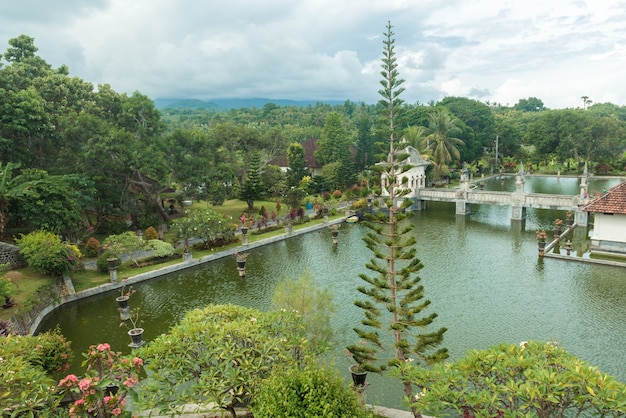
Bali, the global hub for tourism and digital nomads, continues to attract substantial Foreign Direct Investment (FDI) into its vibrant property market. The allure of the island’s high occupancy rates and premium daily rental yields makes Bali holiday rental investment a compelling prospect for global investors seeking robust returns. The tourism sector has historically been a significant driver of Indonesia’s economy, with Bali often leading the way. However, successfully translating this potential into sustainable profits requires a meticulous understanding of Indonesia’s evolving regulatory landscape, particularly concerning foreign ownership and commercial licensing.
In the first half of 2024, Indonesia's realized FDI reached a remarkable $22 billion, with sectors like tourism infrastructure and property development remaining key areas of interest. Yet, the specific regulations governing the operation of Bali holiday rental investment properties by foreigners (PMA companies) are complex, often involving intricate zoning rules (Rencana Tata Ruang Wilayah/RTRW), tax obligations, and specific tourism business licenses. Many potential investors encounter significant challenges, ranging from choosing the correct legal entity to ensuring compliance with temporary lodging permits.
This comprehensive guide, brought to you by Gaivo.co.id—Indonesia’s leading foreign investment advisory firm—demystifies the necessary steps. We provide authoritative insights into the current regulations (2024–2025) and offer practical strategies to establish and manage your PMA Bali property investment compliantly and profitably. Understanding the legal framework is not merely a formality; it is the foundation for secure, high-yield investment.
Related Article: Top Venture Capital Firms in Indonesia: A Guide for Foreign Investors
The Legal Framework for Foreign Investment in Bali Property
Foreign entities wishing to engage in Bali holiday rental investment must establish a Foreign-Owned Company (PMA) and adhere to specific sectoral regulations.
Establishing a PMA for Property Ownership
Foreign investors cannot directly own freehold land in Indonesia. The primary legal pathway is establishing a PMA, which can hold the Right to Build (Hak Guna Bangunan/HGB) or the Right to Use (Hak Pakai) over land for a fixed term, typically up to 30 years, renewable. The establishment process is governed by the Investment Coordinating Board (BKPM) through the Online Single Submission (OSS) system, following the mandate of Law No. 25 of 2007 on Investment and its implementing regulations under the Job Creation Law (UUCK) cluster. The PMA must be registered under the appropriate business classification code (KBLI) for property operation and temporary accommodation.
Tourism Business Licensing (TDUP)
Operating a property as a commercial holiday rental requires a specific Tourism Business Registration Certificate (Tanda Daftar Usaha Pariwisata/TDUP). For villas and apartments rented daily, this typically falls under the KBLI for Temporary Residential Accommodation (Akomodasi Lainnya), often requiring a specific type of TDUP (e.g., Vila/Pondok Wisata). Compliance with regional zoning laws is paramount. The TDUP ensures the property meets standards for safety, service, and legally operates as commercial accommodation, not just a private residence. Minister of Tourism and Creative Economy Regulation No. 10 of 2021 governs this licensing process.
Capital Requirements and Investment Value
The establishment of a PMA generally requires a minimum investment commitment, typically exceeding IDR 10 billion (approx. $600,000 USD), though not all must be paid-up capital initially. Specific minimum paid-up capital rules apply depending on the scale and risk level of the business as categorized by the OSS Risk-Based Approach (RBA). This threshold applies to the entire business operation, which may include the cost of acquiring the property rights and developing the rental operation. Investors should consult BKPM Regulation No. 4 of 2021 regarding RBA implementation.
Related Article: Manulife Investment Indonesia Equity Fund: A Comprehensive Guide for Foreign Investors
The Investment Climate and FDI Trends in Bali
Despite recent global volatility, Bali remains a magnet for FDI, driven by robust visitor numbers and government focus on quality tourism.
High Occupancy Rates and Yields
The appeal of Bali holiday rental investment is substantiated by market data. Premium villas in key areas like Canggu, Uluwatu, and Seminyak often command high Average Daily Rates (ADR) and achieve annual occupancy rates exceeding 70% during peak season. According to a recent report by the Indonesian Central Statistics Agency (BPS), Bali's tourist arrivals rebounded strongly, positioning the region for sustained growth. Investors frequently target Gross Rental Yields between 8% to 15% depending on location and management efficiency.
Government Focus on Quality Tourism and Infrastructure
The Indonesian government is strategically shifting focus toward "Quality and Sustainable Tourism," which involves improving infrastructure and regulating overcrowding. FDI is actively encouraged in supportive sectors, such as green resorts and specialized hospitality services. Recent large-scale infrastructure projects, including airport expansion and improved road networks, further enhance the long-term viability of real estate investment Bali.
Related Article: Indonesia Investment Fund: A Guide for Foreign Investors
Zoning Laws and Permitting Challenges
Understanding local zoning is the most critical hurdle in Bali holiday rental investment.
Rencana Tata Ruang Wilayah (RTRW) Compliance
Zoning regulations (RTRW) dictate where commercial activities, including holiday rentals, are permitted. Many areas previously popular for villas are now being protected as green zones (Zona Hijau) or agricultural land (Lahan Pertanian Pangan Berkelanjutan/LP2B), where new commercial building permits are restricted. Failure to verify that a property is located in a commercial or residential zone (e.g., Zona Kuning or Zona Pariwisata) before investment can lead to building permit revocation or heavy fines. Compliance with the local RTRW is assessed when applying for the Building Approval (Persertujuan Bangunan Gedung/PBG, formerly IMB).
The Importance of the PBG (Permit Bangunan Gedung)
The PBG is the modern replacement for the old IMB and is essential. It certifies that the building design and its intended use comply with technical standards and local zoning. For a Bali holiday rental investment, the PBG must explicitly state the property's function as commercial accommodation. Operating a rental without a valid PBG, or operating commercially with a PBG intended for a private residence, is a serious violation under Government Regulation No. 16 of 2021 on Building Management.
Related Article: Indonesia Nickel Mining Company Stock: Investment Guide
Taxation and Compliance for Foreign Investors
Foreign investors must navigate specific tax liabilities for their Indonesian operations.
Corporate and Rental Income Tax
A PMA company operating a holiday rental business is subject to Indonesian Corporate Income Tax (Pajak Penghasilan Badan/PPh Badan). The standard rate is 22%, though Micro, Small, and Medium Enterprises (MSMEs) may qualify for reduced rates under specific conditions. Additionally, rental revenue may be subject to a final tax based on Gross Revenue or VAT (Value Added Tax), depending on the revenue threshold and KBLI. Proper tax registration (Nomor Pokok Wajib Pajak/NPWP) is mandatory.
Local Tourism Tax (Pajak Hotel dan Restoran/PHR)
Commercial holiday rentals are typically categorized under the Hotel and Restaurant Tax (Pajak Hotel dan Restoran/PHR), a local tax collected by the regional government. This tax rate can vary but is generally around 10% of the gross rental income. The PMA is responsible for collecting and remitting this tax to the local government. Strict adherence to PHR rules is essential for operational compliance in Bali tourism regulations.
Related Article: Shinhan Asset Management Indonesia: A Guide for Foreign Investors
Practical Guidance for the PMA Investment Lifecycle
The investment journey moves through distinct phases requiring precise legal execution.
Due Diligence: Before Acquisition
Comprehensive due diligence is non-negotiable. This involves verifying the property title (HGB/Hak Pakai), checking the land certificate's authenticity with the National Land Agency (BPN), and, most critically, confirming the zoning status (Zona Kuning/Pariwisata) to ensure commercial use is permissible. Engaging a reputable local property lawyer is the best defense against regulatory pitfalls.
Operating Compliantly: Personnel and Visas
The PMA must comply with Indonesian labor law, including hiring Indonesian directors/staff and obtaining proper working visas (Kartu Izin Tinggal Terbatas/KITAS) and work permits (Izin Mempekerjakan Tenaga Asing/IMTA) for any foreign management personnel. A PMA must also adhere to the ratio requirements for local versus foreign staff as stipulated by the Ministry of Manpower (Peraturan Menteri Ketenagakerjaan No. 8 Tahun 2021).
Related Article: KKR Investment Indonesia: A Complete Guide for Foreign Investors
Common Mistakes to Avoid in Bali Property FDI
Many foreign investors fall prey to common errors due to a lack of local knowledge.
Using the Wrong Legal Structure
A frequent error is operating a commercial rental business using a nominee structure or under a basic Hak Pakai title meant for private use, without obtaining the necessary PMA, TDUP, and commercial PBG. This puts the entire investment at high risk of forced closure, fines, and forfeiture of the lease/HGB when caught by local authorities monitoring Bali tourism regulations.
Underestimating Tax and Reporting Obligations
Some investors fail to register their rental income and staff for proper taxation, leading to severe penalties and back taxes once audited. The Indonesian tax authority (Direktorat Jenderal Pajak) has significantly increased surveillance of rental income, especially those advertised on international platforms. Accurate and timely reporting is key to long-term security.
Related Article: Setiabudi Investment Management: A Comprehensive Guide for Foreign Investors in Indonesia
Case Study: A Successful PMA Holiday Rental Strategy
A European investor sought to develop three luxury villas in Canggu. Instead of purchasing existing properties with dubious legal histories, they opted to establish a PMA first. The PMA secured a 25-year HGB title over appropriately zoned land (Zona Kuning). Gaivo assisted in obtaining the KBLI codes 55102 (Vila/Pondok Wisata) and 68112 (Real Estate Development). Crucially, the PBG was explicitly applied for and granted for commercial use. By ensuring this full regulatory compliance from day one, the investor secured financing confidently and is achieving sustained annual yields exceeding 12%, fully compliant with local tax and tourism laws.
Related Article: Private Equity Fund Indonesia: Complete Investor Guide
Securing Your Future in Bali’s Property Market
Bali holiday rental investment offers compelling financial opportunities, but success is inextricably linked to regulatory compliance and strategic planning. The current Indonesian government, while welcoming FDI, demands transparency, particularly in the tourism sector. Establishing a PMA, securing the correct HGB or Hak Pakai title, obtaining the appropriate commercial TDUP and PBG, and meticulously managing tax obligations (PHR and PPh Badan) are the foundational pillars for a sustainable, high-yield operation.